Friday, March 31, 2017

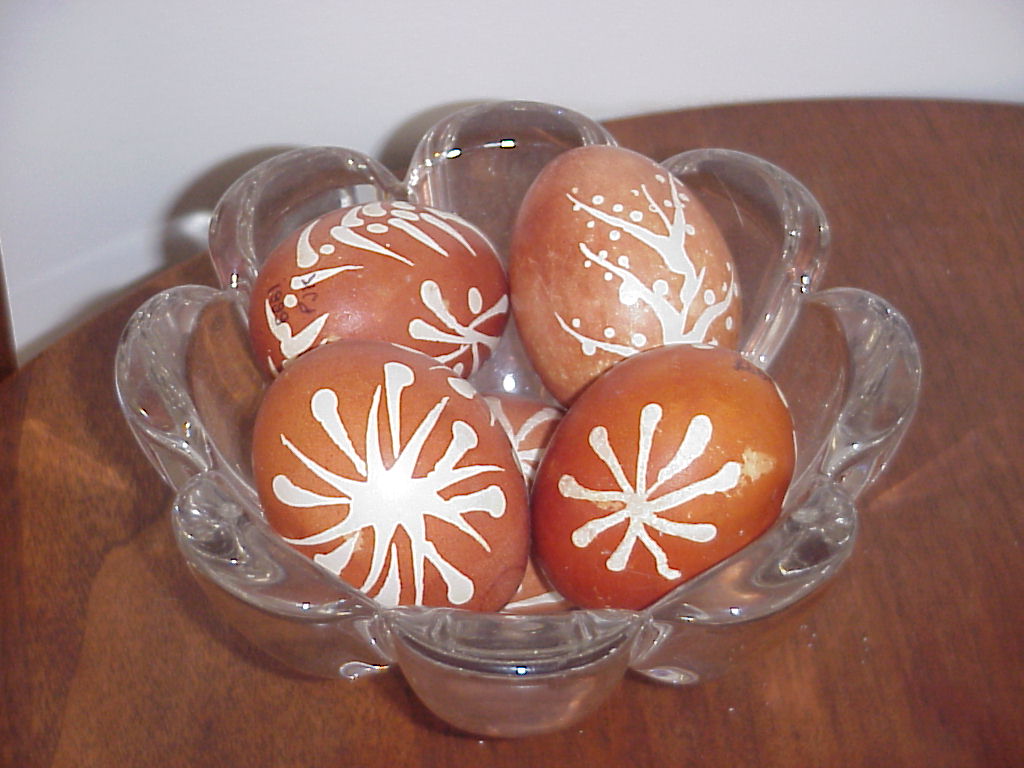
Bohemian Easter Eggs


Designs
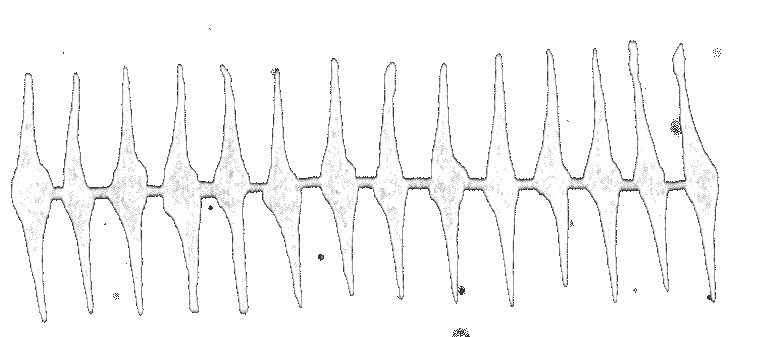
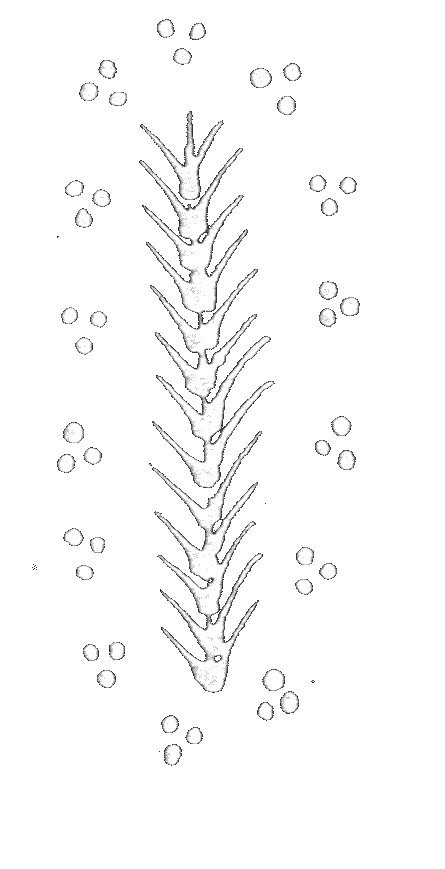
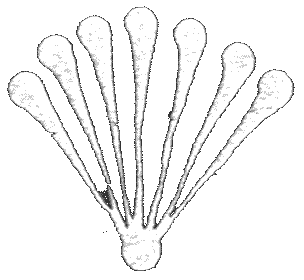
Fishbone (Symbol Of Christianity)
Fishbone
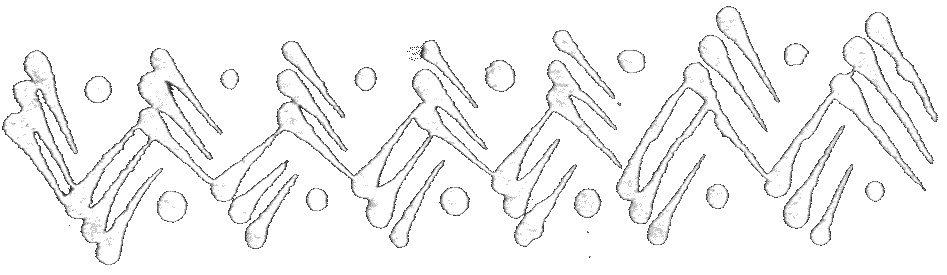
Crown Of Thorns 4
Crown of Thorns
Crown Of Thorns
Crown of Thorns
Crown Of Thorns 2
Crown of Thorns
Crown Of Thorns 3
Crown of Thorns
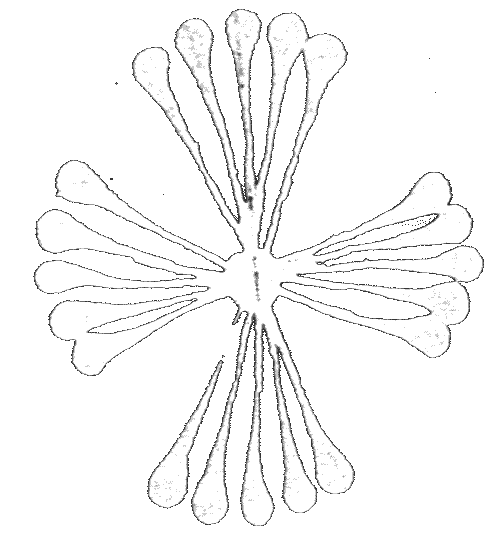
Cross
Cross
Palm Branch
Palm Branch
Pussy Willow
Pussy Willow
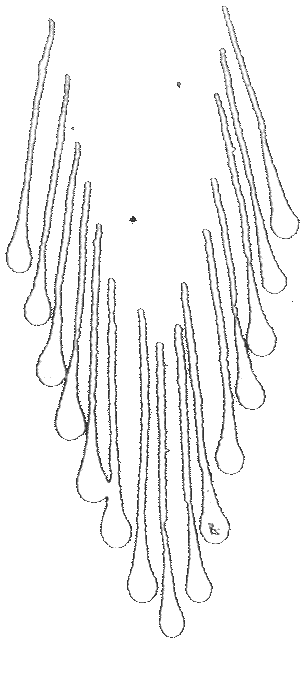
Robe
Robe
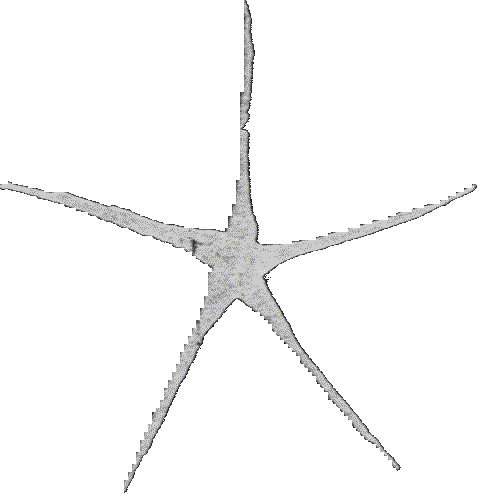
Star
Star
Sun
Sun
Wheat And Grapes (Bread And Wine)
Wheat and Grapes (Bread and Wine)
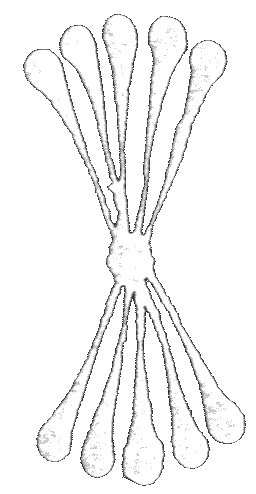
World Without End
World Without End 


This method of making Czech Easter Eggs (Kraslice) was passed down from my Grandmother, Bozena (Bessie) Kuchynka Koktavy, a 2nd generation Bohemian immigrant to the U.S. The designs are much less delicate than the Czech eggs that I've seen. Bessie would decorate hundreds of eggs with a kitchen match and then hard-cook the eggs in a brown dye made from onion skins.
                                                                                    
Ingredients / Supplies

  • A bag full of yellow (Spanish) onion skins - One or two days take of skins from the local grocery store will be enough. Most stores will stock the onions once a day at a particular time. Whenever stocking them, they always end up with a lot of loose skins that they throw away. Just ask the produce manager what time they stock onions so you can drop by and pick them up or if they can save them for you. It might take a couple of trips to coordinate, so plan early.

  • Bee's wax - Bee's was from the market. Paraffin will work just fine.

  • shallow metal container - My grandmother used an aluminum margarine container. Try a tuna can or soda can cut in half.

  • Large kitchen matchsticks - Light the match and extinguish immediately. The larger black end is used for application of the wax. For more delicate decorating you can use a pencil with a flat head dressmaker sewing pin stuck into the eraser. A goose feather pen could also be used. Even more elaborate designs are done by adhering straw to the eggs.                

  • Eggs - white eggs are a good idea so there is a contrast.

Prepare the dye - In a large (6-8 quart) pot bring water and onion skins to a boil. Reduce heat and simmer, continuing to reduce the liquid and adding more water as needed for 3 hours or so. You will want enough liquid to cover all of your eggs completely. Strain removing the onion skins, saving the reddish-brown liquid. Be careful to remove all onion skin residue from the liquid. Allow the liquid to cool to room temperature.


Clean the eggs - Wipe them with vinegar. Remove any spots noting that fingerprints will easily mark the eggs, preventing the dye from penetrating the egg.


Decorate the eggs - Place the wax in a small metal container on very low heat. The wax should be liquid, but should be prevented from boiling. Decorate the raw eggs by dipping the burnt end of the kitchen match into the liquid wax and quickly dragging the end of the match across the egg. There's only one way to learn the timing and strokes necessary to leave the right amount of wax on the egg. Practice makes perfect.


Boil the eggs -
Follow standard recipe for hard-boiled eggs.


Bessie (Bozena Kuchynka) Koktavy


Monday, February 6, 2017

Veggie Fried Rice

Ingredients

• 2 cups cooked brown rice (heated frozen organic brown rice
from TJ’s works great)
• 2 TBS coconut oil
• 2 TBS coconut aminos
• 1 cup snow peas
• 1 can drained and chopped water chestnuts
• 1⁄2 cup onions, diced
• 1 cup chopped bok choy
• 1 ½ cups organic broccoli [sic]florettes
• 1⁄2 cup carrots, diced or shredded
• 1 ½ teaspoons sesame seeds, optional
• Salt/pepper/garlic powder to taste
• 1 tsp sesame oil
• Toss in cashews or chickpeas for added protein, optional
• Garnish – Chopped green onions and red pepper flakes

Instructions
Heat skillet to medium heat and add 2 TBS coconut oil. Sauté onions,
broccoli, snow peas & carrots, bok choy and any other desired veggies
under tender. Add water chestnuts and cook for 2 mins. Add cooked
brown rice. Add coconut amines (resembles soy sauce), sesame oil, and
sesame seeds (optional). If mixture is getting dry, add a splash of veggie
broth. Stir in chick peas or cashews before serving. Garnish with
chopped green onions and dried red pepper flakes.

Source: Arbonne - Week 4 Vegan Menu

Garbanzo Stir-Fry

Ingredients

  • 2 tablespoons olive oil
  • 1 tablespoon chopped fresh oregano (or 1t dried) 
  • 1 tablespoon chopped fresh basil
  • 1 clove garlic, crushed
  • ground black pepper to taste

  • 1 (15 ounce) can garbanzo beans, drained and rinsed
  • 1 large zucchini, halved and sliced
  • 1/2 cup sliced mushrooms
  • 1 tablespoon chopped fresh cilantro
  • 1 tomato, chopped

Directions

  1. Heat oil in a large skillet (Dutch oven) over medium heat. Stir in oregano, basil, garlic, and pepper. Add the garbanzo beans and zucchini, stirring well to coat with oil and herbs. Cook, covered, for 10 minutes, stirring occasionally.
  2. Stir in mushrooms and cilantro, and cook until tender, stirring occasionally. Place the chopped tomato on top of the mixture. Cover, and let the tomatoes steam for a few minutes, but don't let them get mushy. Serve immediately.


http://allrecipes.com/recipe/24379/garbanzo-stir-fry/
Also received via Arbonne group.

Tuesday, October 13, 2015

Pasta with Slow-Cooker Pork Ragù


After frequently making Bolognese sauce and enjoying making and refining its cousins like Ragout,

Borgognone, & Chili, I came across this recipe.

It's a good shortcut using the Croc-Pot, and duh, a pork butt (shoulder) is perfect for this.


I doubled the recipe for the size of our slow cooker and the cut of meat I had.

I also added cinnamon and celery.

It still needs some more spice though. Maybe bay leaf and a tiny bit of cayenne?


Ingredients


•2 large carrots, chopped

•2 medium onions, chopped

•4 cloves garlic, chopped

•2 celery sticks, chopped

•4 tablespoons tomato paste

•1 tablespoon dried thyme

•1 tablespoon dried oregano

•1 tablespoon ground cinnamon

•kosher salt and black pepper

•2 14.5-ounce can diced tomatoes

•3 pounds boneless pork shoulder or butt, trimmed and cut in quarters

•3/4 pound fettuccine

 •1 Box of Rigatoni

•grated Parmesan, for serving


Try:

•Bay leaf (remove after cooking)

•½ teaspoon ground cayenne


Monday, May 25, 2015

Panko Crusted Talapia or Chicken

This is an easy baked go-to. I won’t get into specifics right now, mainly because you can’t mess it up.

Play with it.


The preparation is “dry-wet-dry” – flour-egg-Panko. Get a pan of flour, get a bowl of beaten eggs, get a pan of Panko.


Prepare fish (like frozen tilapia) – pat dry, salt and pepper. I like to separate the filet in half so there are small strips and larger strips. Doing so makes them cook more evenly.

…or chicken breast, cut lengthwise similarly to what you would do with tilapia. You end up with a larger filet and a smaller filet.

1)      Dredge - Dry: flour – put salt and pepper (or any other seasoning you want.)

2)      Dredge – Wet: eggs beaten

3)      Dredge – Dry – Panko (mixed with grated parmesan cheese and whatever spice you like.) Press the Panko into the protein to form a solid 'bark'.
 
 Spray a cooking pan with oil. I usually use canola – anything that won’t smoke at high heat.

 Arrange on the sheet. Spray the cutlets again.

Bake at 400F for about 20-30 minutes watching the color. Flip half way through. When they are slightly golden brown the cutlets will be fine. It’s very forgiving.

Tuesday, May 19, 2015

Amanda's Chai Latte

  • 7c water
  • 4 tea bags
  • 1t fennel
  • 10 peppercorns
  • 1/2c brown sugar
  • 8-10 crushed cardamom pods
  • 1t ground ginger
  • 1 cinnamon stick
Boil then simmer for 20 min

Strain
 
Add 1c milk

Thursday, April 30, 2015

Brandy Milk Punch (Paunch)

Brandy Milk Punch (or Paunch as we call it), has become a holiday favorite. It's simple and easy. It came from Brennan's in New Orleans by way of our friend Suzanna.

Here's my translation for a batch.

Ingredients (about 8 servings)
  • 12oz Brandy
  • 1c simple syrup (1:1 - 1c white sugar to 1c water heated and cooled makes a little more than you need.)
  • 1qt half and half
  • 2T vanilla extract
  • 8 grinds (or dashes) of nutmeg
Serve on ice (if you like that.)

Zip Line


Setting up the backyard zip line has occupied my mind for some time. The good thing is that it works perfectly. Here are some notes.


Concept sketch:
Wow, I need to work on improving my sketching.


The kit:
 http://zlpmanufacturing.mybigcommerce.com/torpedo-zip-line-kit/


See also: 


The hardware is pretty easy to set up.
Insert Manual Here

This is a good resource:
http://www.adventuregods.com/articles.php?region=225


Additional Materials:

I didn't have trees in a convenient spot, so set 4x4 steel posts - 24' 11GA cut in half (for 2 posts).

The posts need a 45 ° tie-back (guy cable) anchored. The anchor I used is called a deadman.
Image result for dead man anchor

I used high capacity truck straps, chain, pipe and concrete. What I like about the design is the 45 ° which will have a footprint of 10 feet (at least in this application) can be removed when the zip line isn't in use. If I were doing a more permanent installation, I'd weld or fasten a steel tube and anchor it.

That's the gas line about 16" down.


Friday, March 13, 2015

Leader-of-the-pack

RIP Yuka Grrl: Born ~1998 - Gotcha Day March 2000 – March 12, 2015

Leader of the Pack:
Yuka Grrl, snowy 2005, Chicago

Yesterday was the end of an era for me and Peter. The final member of our original pack died, peacefully, in our arms. We’d had her for fifteen years this month—so she was somewhere between 16 and 17 years old.

We adopted Yuka from a shelter in Chicago. We were looking for another Shiba—and Peter said he was interested in a red girl. We heard there was a gentle red Shiba girl at a shelter that had not passed the temperament test—meaning after the vet had given her a nasal bordatella vaccine, she had jumped two feet away from him and snapped—so either this Shiba girl had to be taken by a breed rescue ASAP or she would be euthanized. I didn’t think that was a very fair “test” considering the snap happened after shooting something up her nose, so we decided to visit her.

When they opened the door to her cage, she tip-toed carefully over the pooling stinky water in the aisle of the numerous cages.  Finally free of her cramped living space, she immediately pooped and then settled down, away from us—aloof and watchful. Peter liked her immediately. She let me pet her, which was my “test,” and so we decided to bring her home.

Newbies to dog ownership, we thought Trooper would be the “top dog” because he had been the first dog in our house. But after being introduced at a park, we let our two dogs play at home, and Yuka immediately used her longer reach to knock Troop on his back. He got up to wrestle again, and she did it again. And then again.  Trooper seemed to quickly agree with the new hierarchy.

And so it was. Yuka led our pack, fairly, intelligently, and strongly.   
2003: the dog pack
She didn’t care about eating first or getting out the door first—those were tiny moments that were not about leadership. She led via her overall gentleness AND by keeping other dogs in check—if a foster dog bumped into her too roughly, she taught him some manners with a precise nip to the ear. If a foster dog growled at her, Yuka stood her ground and made him re-think his actions. They only made that mistake once; then they knew how to treat her and the rest of the pack. She was a good leader, wise beyond her years, and she helped us foster more than 50 rescue dogs for MSIR during her lifetime.

We finally realized our Yuka Grrl was NOT a Shiba at our first Chicago picnic back in 2001. We looked around at the small and dainty Shiba girls and realized our girl towered over them. And her coloring was different. And her head shape. And ear position. And tail. We started researching, and finally recognized our “ugly duckling” Shiba was in fact a beautiful Korean Jindo.


Yuka was Peter’s grrl—and there was no doubt he was her person. In Chicago, we’d go to obedience training together and the teacher would ask me to work with Yuka sometimes. Yuka obeyed quickly, always looking to Peter before agreeing to the task I’d asked. Her loyalty to him was unwavering.


Living in Chicago without any children yet, Peter and I were a little crazy with our dogs. We took them to Camp Dogwood, dressed everyone up as Superheroes for a Shiba-ween fundraiser,
Catwoman, Superman, Wonder Woman,
Batman and Robin
and even tried agility—with mixed results. Yuka actually was quite good, if not speedy, as she obediently went through weaves and up and down teeter-totters. One day at a practice agility meet, she spotted a tiny Yorkie peeking under a curtain in the ring. Hairs bristling, lips practically drooling, she leaned forward and I knew she was ready to pounce on the squirrel that was about to enter her ring. Barely spotting her distraction in time, I yelled “DOWN” at the top of my lungs—and she obeyed, thank goodness. But that was the end of her agility career.

Yuka was never a frivolous pup. She showed little interest in toys or squeakers, but would collect sticks and rocks in the backyard. She would sit in the sun outside for hours, or hunt squirrels, opossum, and even stray cats that dared to trespass her yard (but she never touched our kitties in the house). 


Her prey drive was a beautiful thing to witness. We loaded up the dogs and took them to Wisconsin for a lure-coursing dog rescue fundraiser. Going so fast you could barely tell where her body and Rico’s began or ended, she would charge after the plastic bag lure that taunted her until the end. Panting heavily, she’d stop for a while only to start chirping when other dogs ran their turns. We learned to fully stretch her legs out before she started or she pull a muscle as she extended everything in the run.


Once we’d had children, Yuka became our go-to girl again.
Yuka and Clara, 2006: Photo by Renny Mills
The Shiba boys could be bratty around kids, but Yuka was solid. In pictures, she sat next to the baby, because we knew if the baby fell on her, she’d be okay with it. We trusted her completely, because we knew she'd protect any of her family.


Yuka accepted “too much love!” from the girls willingly. –and this misidentified "Shiba" girl who was almost euthanized for snapping at a vet tech, did not snap at or bite anyone during her fifteen years with us--although she could offer a powerful bark that made many a delivery person think twice.


As she aged, she kept her mind—wagging her tail in greeting to us from her dogbed, even as she became less and less able to get to the door. Her hearing and eyesight declined more and more, and we had to stomp the floor sometimes to let her know were coming so she wouldn’t be startled when we touched her. This week, after her legs completely failed her, Peter and I knew it was finally time to say good-bye, even though neither of us were really ready to do so.


Rest in peace Yuka Grrl.  Our pack is waiting for you upstairs. We know you’ll be romping with Trooper (2014) , Rico (2007), Banzai (2009) and Xerxes (2007) and honorary member Tipper (2013).

Wednesday, January 28, 2015

Brined Smoked Turkey

Our Brined Smoked Turkey has surpassed an over a decade tradition of frying turkey in peanut oil. Gathering the family early to inject birds and find a safe place in the yard for hot oil may be a thing of the past.
 
The brine comes from Alton Brown. It’s the first thing I tried and it’s worked out well for a few years.
 
• 1 (14 to 16 pound) frozen young turkey
• 1 cup kosher salt
• 1/2 cup light brown sugar
• 1 gallon vegetable stock
• 1 tablespoon black peppercorns
• 1 1/2 teaspoons allspice berries
• 1 1/2 teaspoons chopped candied ginger
• 1 gallon heavily iced water
 
2 to 3 days before roasting:
Begin thawing the turkey in the refrigerator or in a cooler kept at 38 degrees F.
Combine the vegetable stock, salt, brown sugar, peppercorns, allspice berries, and candied ginger in a large stockpot over medium-high heat. Stir occasionally to dissolve solids and bring to a boil. Then remove the brine from the heat, cool to room temperature, and refrigerate.
Early on the day or the night before you'd like to eat:
Combine the brine, water and ice in the 5-gallon bucket. Place the thawed turkey (with innards removed) breast side down in brine. If necessary, weigh down the bird to ensure it is fully immersed, cover, and refrigerate or set in cool area for 8 to 16 hours, turning the bird once half way through brining.
 
Smoking:
For a smaller bird like above plan for about 8 hours. It’s very forgiving with the brine and enough smoke early on. The general guideline is 225F-250F @ 20-40min per pound to an internal temperature of 165F. Breast side up for course. I leave the plastic pop thermometer in and also put a roasting thermometer in. (You know, not touching bone in the middle of the breast.


Thursday, October 30, 2014

Kansas City Barbecue Rub


3/4 cup [brown] sugar
1/4 cup seasoned salt
1/4 cup garlic salt
1/4 cup paprika
1/4 cup barbecue seasoning
1/4 cup cocoa powder
1 1/4 T onion salt
1 1/4 T celery salt
1 1/4 T chili powder
1 1/4 T black pepper
1 T ground ginger
1 T lemon-pepper
1 T ground thyme
1 T ground red pepper

Based on Better Homes and Garden’s SMOKE COOKING Kansas City Barbecue Rub

Monday, September 15, 2014

Grammy's Chocolate Ice Cream

This was inspired by Grammy's Chocolate Ice Cream made in an ice / rock-salt ice cream maker. (I heard a few kids rave about it.)

My first attempt was more concentrated - sweeter and with more chocolate made in our Cuisinart ICE-20 – 1 ½ quart model. I doubled the recipe in order to make two batches for a kid birthday party.

  • 1 bar Ghirardelli 100% cocoa chocolate
  • 1 bar Ghiradelli 60% cocoa chocolate
  • 3 cups granulated sugar
  • 2 qt half and half (You will use a little less than 2 qt.)
Grate chocolate. (I used a food processor.) In 30 second increments, carefully melt chocolate in the microwave.

Combine 1 qt half and half, 3 cups sugar, and melted chocolate in a blender. Blend thoroughly.

Turn on the ice cream maker before adding ingredients. (I’ve broken a paddle by letting liquid sit in the container too long before it was running.)

Add half of the mixture to the ice cream maker. Add additional half and half to the ice cream maker's Fill Line.

Run the maker for 30-40 minutes until the mixture is firm. Any longer and the container may start to warm up too much.

Repeat for a 2nd batch.

Serve immediately if desired. For a slightly more firm consistency, cover and place in the freezer for about 2 hours. (This is my preference.)

Friday, May 30, 2014

My dog. My friend.

Trooper Troop de Doop
May 28, 1999 – May 29, 2014

2005, Chicago
I got Trooper to celebrate being finished with school. Finally finished. As in, I finally have the PhD and I’m done done done. Before he was born, I called him my Ph-illy Dog, rejoicing that I would now have extra time to do something beyond writing papers and reading books. He was my reward.

I researched various breeds and decided on this cool little Asian breed that no one had heard of, a Shiba Inu. The book told me that Shibas were smart, fairly easy to train, didn’t shed a lot, and would be a lot of fun. –and they looked cool, just like little Akitas. Most of that turned out wrong--but I didn't know that yet.

So I found a breeder nearby in Nebraska and visited. Peter and I met Malamutes and Shibas there, and I fell in love with the Shibas’ spirited attitude.


Chicago, 1999
When Trooper was born, he was a singleton, the only pup in the litter. Luckily, I had been the first person to put down a deposit, so if I wanted him, he was mine. We visited again when he was four weeks old—and he appeared lame. He couldn’t get up on all four feet because his dog mom had stepped on him that morning. The vet told the breeder that he might never be able to walk and that he might need to be put down. I cried so many tears that I retreated to the bedroom with a migraine.  But after many heart-to-heart conversations, Peter and I decided we would take the lame little pup anyway, if he could walk at all. I remember saying, “he might not be the fastest Shiba, but he’ll be mine.”

Chicago, 1999
A week later, Trooper was up on all fours—running even—and he proved everyone wrong.  –and that’s how he earned his name. He was a trouper, someone who didn’t give up and who kept trying. Someone who was resilient in the face of many challenges. Someone who would teach me life lessons all the time without trying.

2005
I found out quickly that I knew nothing about Shibas. I remember vividly calling the obedience school and the line going dead—because Troop had chewed through the telephone cord. I remember teaching him to fetch with tiny felt cat toy balls—because that’s as big as his mouth was. He graduated to holding the fuzz on tennis balls, and eventually could catch a ball in mid-air with a stylish half-twist.  He would lick his nose if I made kissy sounds, and he would kiss my hand on cue, when I created an O with my fingers. He blew enough coat to make another dog. Twice a year.


Trooper had his idiosyncrasies, like many other Shibas. He growled at slippers, especially if they tried to grab him as he trotted by. He didn’t like flies—and would either snap at them crazily or drop his tail and bolt from them, whining. He had seasonal allergies and preferred the couch to being outside. In short, he was not a dog all the time, but a short, furry person with mild anxiety.

Chicago, 2002
But he did manage to succeed. We trained in agility together, and he was really talented. The instructor thought he might be her first Shiba to actually do well in competitions. –and he did. In the very first Jumpers-With-Weaves competition (an obstacle course of mainly jumps with weave poles that the dog has to move his body back and forth between), he only missed one jump, earning a 95 out of 100. No one else fared any better, so we won first place. 

We moved onto our second competition of the day—a regular obstacle course—and he did similarly fabulously for about half the course. Then he got excited, and being a Shiba, he started tearing around the course, running in circles faster and faster doing what we call “the Shiba 500.”  I unsuccessfully tried to get him back on the course—then tried to get him to come back to me—even humiliating myself by crawling toward him with tempting treats—but the crowd cheered loudly every time he started a new cycle and he loved the attention. I finally caught him by telling him to go into a tunnel and running to the other side to grab him as he exited. He was pumped. He loved agility—or actually he loved ignoring the agility course, while I chased him. He never completed another course or won another ribbon.
Chicago, 2003


But he was my friend, so it was okay. Peter told me once, “All Troop wants to do is sit on the couch with you” and I realized that was more than enough. We didn’t have to train for hours together. We didn’t have to compete. We could just be buddies. –and we have been.

Camp Dogwood, 2002
Trooper introduced us to other Shiba owners in the area, which led to Shiba picnics and eventually dog rescue, as we learned about the overwhelming numbers of Shibas that end up in shelters due to their obnoxious adolescence. Eventually we adopted our female Jindo Yuka Grrl, and soon after that, we (and three others) were inspired to co-found Midwest Shiba Inu Rescue, a breed rescue group that solely helps displaced Shiba Inus. But Troop was the beginning of all that for us. He helped save hundreds of dogs just by existing.

Chicago, 2003
Trooper was the funny sidekick to Yuka's serious Jindo temperament. Yuka would kill a squirrel in the backyard and sit down calmly. Trooper would run in huge circles carrying the dead animal in his mouth, like a trophy that he had earned himself. Yuka would catch a trespassing neighborhood cat--and Trooper would get beat up by the cat, who then landed on his head when I demanded Yuka release it. He'd eat an entire pan of brownies. Or an entire package of Oreos. Or he'd end up Wheat Thinned with the box on his head, sniffing out the last crumbs. She barked. He boofed. 


But Troop always knew who his family was.
Trooper, Yuka Grrl, Xerxes, Banzai, 2003
Peter and I fostered many dogs in Chicago—our numbers were about 50 total while there—and Troop acclimated well to all of the incoming and outgoing Shibas. He didn’t mind that they shared his humans and space, as long as they didn’t sniff his butt. One time we were fostering a bratty Shiba girl who liked to try to dominate others. When Peter’s parents came to visit, she rushed his dad, attempting to nip at him. She was surprised by Trooper who knocked her flat with his body. He knew Papa was there as family, and he didn’t allow bratty Shiba girls to take a bite out of his people.

The family, 2006.
With Clara, 2006.
In 2006, we moved to Oklahoma City, and Troop again adjusted to the new plan of adding human girls to our pack. He wasn’t sure at first about these little crawling creatures, but he soon realized they had treats to share with him. –and he always liked sharing treats, as long as he wasn’t the one having to share his personal stash. He decided in about 2008 that he would start sleeping on a floor pillow in Clara’s room, and only gave that up when the stairs became too tough to navigate on his own.
with Clara, Olivia in 2009
He let Clara learn how to train a dog in 2012 by going to obedience school with her (and me). We figured it would be easier to learn how to train a dog, if the dog already knew some of what was expected. He loved working with her. And he loved the treats and extra attention.
with the family, in 2012.


The last few years have been tough here, watching him decline, as his kidney functionality diminished, and he lost muscle control in his back legs. His balance has been off for months, and he seemed lost sometimes, as he tried to figure out where his bed was behind couches or tables, places where his bed had never been.  Today I’ve been petting him, and he still pushes his muzzle into my hands, but he can’t get up easily anymore, he isn't interested in special treats, and he falls too often when he stands. It’s time to say good-bye, which I hate, but I know it’s my responsibility.  

And while I will miss him always, as my first Buddy-Boop Troop-de-Doop, I also know that he knows how much he was loved, and how much he taught me about life: accept life’s challenges, don’t give up, play fun games, laugh at yourself, help others, protect your family, and know when it’s time to sleep.

2005